


 United States
 Best Seller
 Label Printers
 All PDAs
 All Tablets
 All Thermal Labels
 Printer Accessories
Sustainable business practices are a priority for companies today as they rethink their product packaging. Packaging represents a portion of the overall branding process that is very often overlooked by most people. Shipping labels, barcode stickers, and product IDs all serve a critical function in commercial transactions by offering businesses an opportunity to reduce their environmental footprint.
The importance of eco-friendly labeling becomes apparent here. By implementing sustainable labeling practices with the use of eco-friendly labels, companies can accomplish three objectives: reduce waste, reduce their carbon emissions, and align with modern, environmentally conscious consumers who value sustainability.
The complete MUNBYN thermal label guide provides you with everything you need to do to build an environmentally-friendly brand, while also reducing waste and increasing consumer confidence in your commitment to sustainability.
Why Eco-Friendly Labels Matter Today
Sustainability begins with a decision on what product or package label to use. Most traditional printed labels contain some sort of chemical-based ink or toner, adhesive, and plastic film, making them difficult to recycle and adding to already existing waste streams. Consumed materials need to be disposed of, such as printer cartridges and ribbon rolls, resulting in more landfill waste and increased financial cost for the business.
Unlike traditional labels, eco-friendly labels (like thermal) are designed to remove the material used in traditional print labels, while providing an environmentally safer alternative that is made from 100% recyclable materials; therefore, they are the best environmentally and economically responsible decision that businesses can make.
What Are Eco-Friendly Thermal Labels?
Eco-friendly thermal labels are specialized labels printed with direct thermal or thermal transfer technology, which eliminates ink, toner, ribbons, and extra supplies. Instead, heat and specially treated label paper do the work, transforming a simple sheet into a clear, durable label without unnecessary materials.
This reduction of consumables — and consequently waste — makes thermal labels a practical example of green labels that reduce ecological footprint without compromising quality or performance.

Meet MUNBYN Thermal Labels: Green Label Solution
MUNBYN thermal labels provide businesses of all sizes with a durable solution that successfully combines their operational needs with environmentally sustainable practices. MUNBYN's thermal labels serve multiple purposes, which include shipping needs, product branding requirements, barcode tagging functions, inventory management systems, and creative labeling applications.
★ Ink and toner free: The printing process requires heat and heat-sensitive paper because it does not need inks and toners that contain hazardous substances and create waste cartridges.
★ BPA/BPS free: The MUNBYN labels contain no BPA or BPS because these industrial chemicals exist in thermal papers, which pose health risks and environmental dangers.
★ Recyclable and responsibly sourced: MUNBYN labels achieve FSC® certification, which guarantees that their paper comes from sustainable forests and responsible wood sourcing practices that protect forests and support environmentally friendly forestry.
★ Oil-resistant, waterproof, and long-lasting: MUNBYN thermal labels endure all types of real-world conditions because they maintain their original print accuracy without requiring reprints, which leads to waste reduction from labeling.
Green Label Features That Empower Business Growth
The best eco-friendly labels do more than benefit the environment — they improve your business operations too. Here’s how MUNBYN thermal labels support that growth:
Versatility to Support Multiple Uses
From small address labels to customizable product tags, MUNBYN offers a wide range of label sizes — like 4×6" shipping labels, round decorative labels, and Kraft brown eco-style labels — all designed to be printed on demand with zero inks required.
Custom Branding Capabilities
MUNBYN’s thermal labels aren’t just functional — they’re customizable. You can design and print unique shapes, text, and graphics directly from the MUNBYN Print app, allowing small businesses to elevate brand presence while maintaining eco-friendly practices.
Durability That Reduces Waste
Because MUNBYN thermal labels are waterproof and oil-resistant, they resist damage during shipping and handling — meaning fewer wasted labels due to reprints or failing adhesive jobs. This not only reduces waste but also saves time and money.
Choosing the Right MUNBYN Labels for Your Business
Here’s how to select the best green thermal labels from the MUNBYN catalog:
Shipping & E-Commerce Labels
For online store fulfillment, choose 4×6 direct thermal shipping labels that print crisp, scannable barcodes and addresses without using ink or toner. They’re compatible with most major shipping platforms and thermal printers.
Branding & Product Tags
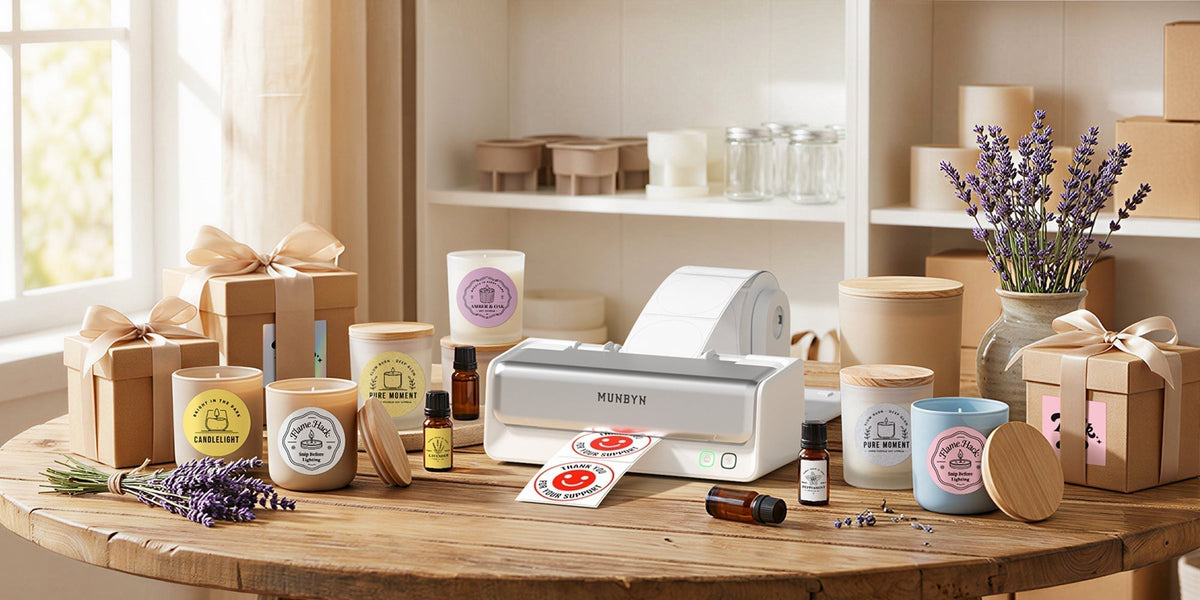
Thermal sticker labels in round or rectangular shapes are perfect for product labels. They are both visually appealing and durable. They are great for companies with minimal design requirements but want to ensure a sense of quality and branding.
Eco-Friendly Kraft Labels
For brands that emphasize natural or organic themes, kraft brown thermal labels provide a visually earthy, sustainable feel, which maintains its waterproof and reliable properties. The labels contribute to packaging improvement without creating any negative impact on environmental sustainability.

Creative & Decorative Labels
For companies looking to add a touch of creativity to their product labels, various shapes such as stars and hearts are available. The direct thermal labels are also great for companies looking to add a touch of creativity while keeping costs low.
Eco Labeling in Practice: Why You Need Them
Here are examples of how switching to MUNBYN green labels can help businesses:
Small Retail & Artisans
Artisans selling handmade goods can use customized eco-friendly thermal labels to reflect brand values, communicate sustainability to customers, and stand out in markets or online shops.
E-Commerce Sellers
Online sellers often choose thermal shipping labels because of speed and integration with platforms like Shopify, Etsy, Amazon, eBay, UPS, FedEx, and more. Eliminating toner and ink also avoids shipment delays and waste.
Organizational Uses
From organizing storage to event planning, thermal labels enable clean, reusable identification without environmental guilt.
Brands Building Sustainable Narratives
Eco-brand stories thrive on consistency. Switching to eco-friendly thermal labels from MUNBYN reinforces a sustainable identity from the packaging inward — inspiring consumer trust and loyalty.
Tips for Maximizing Eco Impact With MUNBYN Labels
To maximise your green/eco benefits from your thermal labels:
✔ Select sustainable materials – Use certified recycled or FSC®-certified manufacturers or suppliers.
✔ Design for recycling – Avoid printing on whole surfaces where possible, making them easier to recycle later.
✔ Use recyclable packaging with your thermal labels — Cardboard, kraft paper, and many other sustainable substrates work well with thermal labels.
✔ Educate customers about eco credentials – Indicate this information on your product data sheets and/or other packaging to reinforce the brand you want to portray as green and eco-friendly.
Conclusion
Today's consumers now consider sustainability to be their most important value. The use of eco-friendly labeling proves to be both environmentally responsible and beneficial for business operations. MUNBYN thermal labels enable businesses to decrease material waste while eliminating their need for dangerous substances such as BPA, and they achieve better labeling results without losing product excellence. (Use the discount code "MYSEO" for an extra 8% off)
Thermal green labels provide new e-commerce businesses, established retailers, and innovative artisans with a solution that enhances their operations while demonstrating their commitment to environmental sustainability.
Share:
Valentine’s Day Gift Ideas for Creative Women
Why Shipping Labels Fade? How to Prevent It?